Wine Rack Cabinet Buying Guide: Top Picks Compared

Affiliate disclosure: Some links on this page are affiliate links. If you buy through them we earn a small commission at no extra cost to you. Recommendations are research-driven; we don't claim personal use of every product reviewed. Product prices and availability are accurate as of the date published and are subject to change. Always check Amazon for current pricing before purchasing. Learn more.
Quick Picks
X-cosrack Wine Bar Rack Cabinet with Detachable Wine Rack, Coffee Barwith Glass Holder, Small Sideboard and Buffet
Multi-functional design combines wine storage, coffee bar, and buffet display
Buy on AmazonBamboo Wine Rack, 3-Tier 12 Bottles Wine Storage Cabinet Shelf, Easy-Assembly Freestanding Bamboo Wine Racks Countertop
Holds 12 bottles with 3-tier storage capacity
Buy on AmazonNavtcow Wine Rack and Water Bottle Organizer 2 in 1 for Cabinet and Countertop - Adjustable in 2 Sizes (Acacia Wood 2
2-in-1 design organizes both wine bottles and water bottles efficiently
Buy on Amazon| Product | Price Range | Top Strength | Key Weakness | Buy |
|---|---|---|---|---|
| X-cosrack Wine Bar Rack Cabinet with Detachable Wine Rack, Coffee Barwith Glass Holder, Small Sideboard and Buffet best overall | $$ | Multi-functional design combines wine storage, coffee bar, and buffet display | Small sideboard size limits total storage capacity for entertaining | Buy on Amazon |
| Bamboo Wine Rack, 3-Tier 12 Bottles Wine Storage Cabinet Shelf, Easy-Assembly Freestanding Bamboo Wine Racks Countertop also consider | $$ | Holds 12 bottles with 3-tier storage capacity | Freestanding design may tip with full load | Buy on Amazon |
| Navtcow Wine Rack and Water Bottle Organizer 2 in 1 for Cabinet and Countertop - Adjustable in 2 Sizes (Acacia Wood 2 also consider | $$ | 2-in-1 design organizes both wine bottles and water bottles efficiently | Unknown brand may lack established reputation in wine rack category | Buy on Amazon |
| X-cosrack Wine Bar Rack Cabinet with Detachable Wine Rack, Coffee Bar Cabinet with Glass Holder, Small Sideboard and also consider | $$ | Detachable wine rack offers flexible storage and display options | Multi-function design may sacrifice depth in any single category | Buy on Amazon |
| Homeiju Wine Rack Freestanding Floor, Bar Cabinet for Liquor and Glasses also consider | $$ | Freestanding floor design requires no wall mounting or installation | Freestanding floor units typically occupy more floor space than wall-mounted | Buy on Amazon |
Finding a wine rack cabinet that actually fits your space — and your collection — takes more evaluation than most buyers expect. The storage format, material, and footprint all interact in ways that make the wrong choice feel obvious only after assembly. These picks cover the Wine Racks category from compact countertop formats to full freestanding bar cabinets, filtered by owner consensus and specification review.
A wine rack cabinet solves a specific problem: storing bottles accessibly without dedicating a full cellar or built-in unit to the task. The five picks here range from bamboo countertop shelving to multi-function sideboard formats — different answers to the same core question of where the bottles go.
What to Look For in a Wine Rack Cabinet
Storage Capacity and Bottle Compatibility
Capacity numbers on wine rack cabinets are almost always stated for standard 750ml Bordeaux-style bottles. Larger formats — Burgundy, Champagne, magnums — run wider at the base and will not fit standard horizontal cradles. Owner reviews across multiple purchase periods show this is the most common source of post-purchase disappointment: a 12-bottle rack that effectively holds 8 once the buyer’s actual mix is accounted for.
Count the bottles you currently store, then add 30 percent. Collections expand. A rack that is full on day one offers no room to grow, and the friction of searching for secondary storage tends to produce worse outcomes than buying slightly more capacity upfront.
Material and Long-Term Durability
The two dominant materials in this category are wood — bamboo, acacia, pine, MDF with veneer — and metal, either powder-coated steel or wrought iron. Solid wood and bamboo look warmer and integrate better into living or dining rooms. They also require more maintenance: periodic oiling or sealing, attention to humidity, and protection from direct moisture.
Metal frames are lower maintenance and more dimensionally stable in fluctuating humidity. The trade-off is aesthetic — metal is industrial where wood reads as furniture. For kitchen or dining room placement, wood generally earns better long-term satisfaction scores in owner feedback. For a utility space, metal’s durability advantage is harder to argue against.
Footprint and Placement Constraints
A freestanding floor cabinet and a countertop rack are solving different placement problems. The floor unit typically offers more total storage but consumes square footage and benefits from being positioned against a wall for stability. The countertop format demands available horizontal surface and imposes a lower effective capacity ceiling.
Measure your available space before evaluating specific products — not the other way around. Width, depth, and clearance height all matter. Some multi-function cabinets are deceptively deep; they fit the floor plan but block a drawer or conflict with a door swing. The full range of wine rack formats, from wall-mounted to freestanding to countertop, is worth surveying before narrowing to a single style.
Multi-Function Cabinets vs. Dedicated Wine Storage
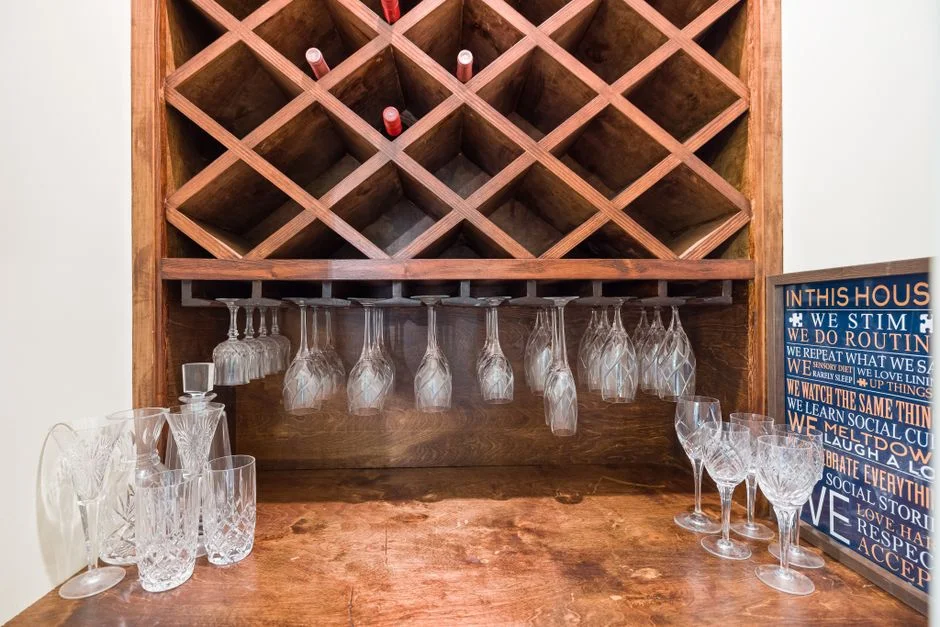
A cabinet that combines wine storage, glass hanging, and buffet surface does three things adequately rather than one thing well. For buyers who genuinely need all three functions in a compact footprint — a small apartment, a studio, a bar nook with no room to expand — the multi-function format is a strong practical answer.
For buyers whose primary need is bottle storage, a dedicated rack with more capacity per square foot will serve better. Multi-function units tend to cap bottle count in the 6–12 range to preserve surface space. If the wine storage is the dominant need, the counter space and glass hooks are features you’re paying for without using.
Top Picks
X-cosrack Wine Bar Rack Cabinet with Detachable Wine Rack (B09G9L5PVT)
The X-cosrack Wine Bar Rack Cabinet with Detachable Wine Rack addresses a real constraint: the buyer who needs wine storage, a coffee station, and a display surface but has room for only one piece of furniture. The detachable wine rack section is the detail that earns attention here — it allows the cabinet to be reconfigured if priorities shift, which is not typical of this format.
Owner reviews note the sideboard surface functions well as a coffee bar, and the integrated glass holder keeps stemware accessible without a separate rack. The trade-off is that the small overall footprint limits total bottle count. This is not the right answer for a collection that has grown past a dozen bottles — but for a small apartment setup where the wine storage and the bar function coexist in the same zone, the case for this format is strong.
Check current price on Amazon.
Bamboo Wine Rack, 3-Tier 12 Bottles Wine Storage Cabinet Shelf
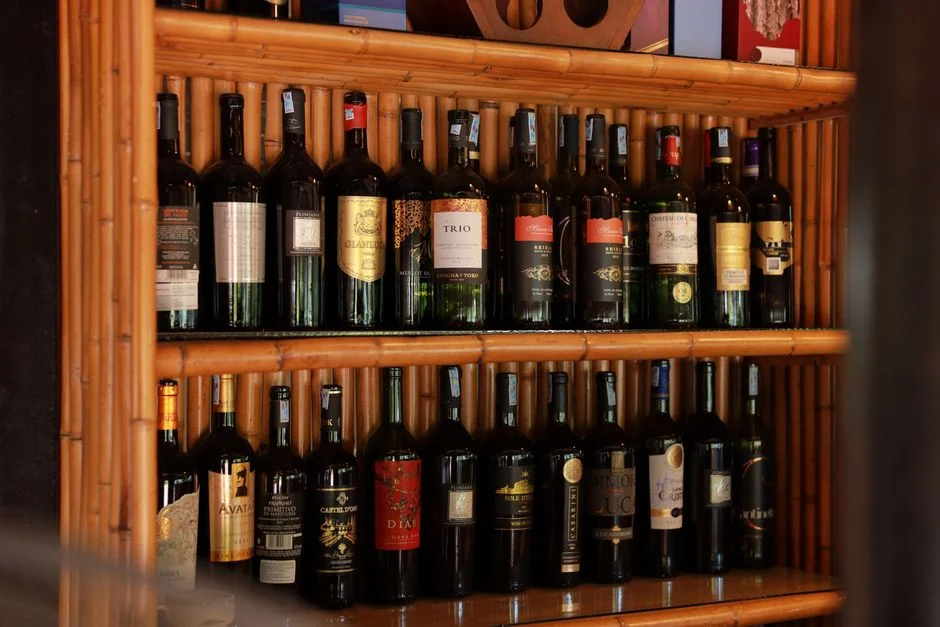
For buyers whose need is straightforward — horizontal bottle storage, minimal footprint, natural material — the Bamboo Wine Rack, 3-Tier 12 Bottles Wine Storage Cabinet Shelf delivers on the basics. Three tiers hold 12 standard bottles, the bamboo construction reads cleanly on a countertop or open shelf, and the assembly process earns consistent positive marks from owners.
Bamboo is a reasonable material choice for a wine rack in a climate-controlled interior, but it is not maintenance-free. Long-term owners report that periodic oiling keeps the material from drying out and developing small cracks, particularly in low-humidity environments or rooms with forced-air heat running through the winter. Stability with a full 12-bottle load is worth testing against your surface — owner feedback occasionally flags that the freestanding design needs a level, stable platform to sit flat.
The 12-bottle ceiling is the practical constraint to weigh honestly. For a collection that is actively growing, this is a starting point rather than a long-term answer. For a kitchen counter holding the current rotation of bottles in use, it fits the need well.
Check current price on Amazon.
Navtcow Wine Rack and Water Bottle Organizer 2 in 1
The Navtcow Wine Rack and Water Bottle Organizer 2 in 1 earns its place here on specificity of use case: the buyer organizing a cabinet or countertop that holds both wine bottles and a daily-rotation of water bottles or tall pantry items. The adjustable sizing accommodates different shelf dimensions, which addresses a real friction point in cabinet-placement racks — a fixed-width unit that doesn’t quite fit the available space.
Acacia wood construction is durable and dimensionally stable compared to softer woods, though it carries the same maintenance obligations as any solid wood in a kitchen environment. Spec sheets show the adjustable mechanism is straightforward, and owner feedback confirms it functions as described. The unknown-brand concern is real — there’s no long-term field history to draw on — but verified buyers have not flagged structural failures in the current purchase period.
Check current price on Amazon.
X-cosrack Wine Bar Rack Cabinet with Glass Holder (B0B7KZ5P4J)
This variant of the X-cosrack format — the X-cosrack Wine Bar Rack Cabinet with Glass Holder — targets a similar buyer as the first pick but in a more compact sideboard configuration. The footprint suits small spaces and apartments where a larger floor unit isn’t viable, and the combination of wine storage, glass hanging, and cabinet surface covers the core bar-nook functions in one piece.
The multi-function design involves the same trade-off as the other X-cosrack variant: bottle count is limited by the surface and glass-holder allocations. Owner consensus points to this working well as a decorative display piece and functional bar station, but not as primary storage for an active collection above eight to ten bottles. The compact format is the feature, not a limitation to work around — buyers who need it will know immediately.
Check current price on Amazon.
Homeiju Wine Rack Freestanding Floor, Bar Cabinet for Liquor and Glasses
Among the freestanding floor formats in this group, the Homeiju Wine Rack Freestanding Floor, Bar Cabinet for Liquor and Glasses is the most complete bar-storage solution. The design accommodates wine bottles, liquor, and glassware in a single freestanding unit — which is a different functional brief than the countertop or cabinet formats above.
The floor placement means it needs a dedicated wall position for stability and won’t suit buyers working with limited floor space. What it offers in return is the most storage breadth of any pick here: bottles horizontal in the wine rack section, bottles upright for spirits, glasses hanging or shelved. For a buyer furnishing a dedicated bar corner or dining room alcove, owner reviews consistently describe this as a satisfying all-in-one solution. For buyers who need maximum wine-specific bottle count, a dedicated rack format will outperform it.
Check current price on Amazon.
Buying Guide
Matching Cabinet Format to Actual Placement
Before evaluating any specific product, identify where the unit will actually live. A floor-standing bar cabinet needs floor area and wall clearance; a countertop rack needs stable horizontal surface and overhead clearance for stacking. These are not interchangeable formats dressed up as options — they solve different placement problems.
Measure the space with the furniture already in position, not on an empty floor. Depth matters as much as width: several mid-range cabinets in this category run 12–14 inches deep, which can conflict with chair clearance or cabinet doors in a kitchen or dining room.
Bottle Count: Start Higher Than You Think
The most consistent regret pattern in long-term owner reviews is buying too little capacity. A rack that fills immediately puts the buyer back in the same position — searching for secondary storage, which usually means a less organized solution than a single purpose-built unit.
Owner consensus across the category points to treating stated capacity as a maximum under ideal conditions, not a practical working number. A mix of bottle sizes, a few magnums, or simply the reality that a full rack is harder to navigate than a half-full one will reduce effective capacity. Buy for where the collection is going, not where it is today.
Assessing Build Quality Without Hands-On Access
The challenge with online furniture purchases is that material quality is difficult to assess from listing photos. Spec sheets show nominal dimensions and stated materials but don’t communicate joinery quality or finish consistency. For this category, owner photo reviews and verified-purchase comments at the six-month-plus mark are more reliable than listing copy.
Look specifically for comments on wobble under load, finish durability after repeated use, and whether assembly tolerances held up over time. These are the failure points long-term owners report — not the materials themselves, but the execution. The Wine Racks hub covers format comparisons in more depth, including wall-mounted alternatives where floor and counter placement aren’t viable.
Multi-Function vs. Single-Purpose: An Honest Trade-Off
A multi-function cabinet combining wine storage, glass hanging, and a buffet surface is an appealing concept for compact living spaces. The practical limitation is that the wine storage component in these units is typically sized to coexist with the other functions — not to optimize bottle count.
For buyers who genuinely need all three functions in one footprint, the multi-function format earns its place. For buyers whose dominant need is bottle storage, a dedicated rack with the same footprint will hold more bottles and handle the collection better as it grows.
Wood Maintenance in Kitchen Environments
Both bamboo and acacia wood are good material choices for this category — stable, attractive, and appropriate for interior furniture. Both require periodic attention in kitchen environments where humidity fluctuates and surfaces get wet. Oiling every three to six months prevents drying and surface cracking on bamboo; acacia benefits from occasional food-safe oil treatment as well.
This is not high-maintenance ownership, but buyers who want zero-maintenance storage should weight metal or powder-coated steel alternatives more heavily. Wood racks will look better longer when maintained; they will show wear faster when they aren’t.

Frequently Asked Questions
What is the difference between a wine rack cabinet and a regular wine rack?
A wine rack cabinet combines bottle storage with enclosed cabinet space, a display surface, glass storage, or multiple functions in one furniture piece. A standard wine rack is single-purpose — horizontal cradles for bottles, nothing more. Cabinets take up more space and cost more but address buyers who need bar or display functionality alongside the bottle storage.
How many bottles does a typical wine rack cabinet hold?
Most mid-range wine rack cabinets in this format hold between 6 and 16 bottles, with multi-function units typically at the lower end of that range to preserve surface and glass storage space. Dedicated freestanding floor units tend toward higher capacity. Stated capacity almost always assumes standard 750ml Bordeaux-profile bottles — wider Burgundy or Champagne bottles will reduce the effective count.
Is bamboo or wood better for a wine rack cabinet?
Bamboo and solid acacia wood are both practical choices for interior use. Bamboo is lighter, takes finish well, and has a consistent natural grain. Acacia is denser and more dimensionally stable in humidity fluctuations. Both require periodic oiling to prevent surface drying in heated interiors.
Will a freestanding floor wine cabinet tip over when fully loaded?
Freestanding floor units are more stable than countertop racks under load but still benefit from placement against a wall. Fully loaded racks shift their center of gravity forward. Owner reviews for this category flag stability issues more often with countertop or lightweight freestanding designs than with floor cabinets, but positioning against a wall is sound practice for any freestanding unit holding several kilograms of glass bottles.
Can I use a wine rack cabinet in a kitchen without climate control?
A wine rack cabinet stores bottles accessibly but does not regulate temperature. Kitchen environments typically run warmer and experience more humidity and light fluctuation than is ideal for wine storage. For bottles you plan to drink within a few weeks, a kitchen cabinet format is fine. For longer-term storage of bottles you’re aging, a dedicated wine cooler is the more appropriate solution.
Where to Buy
X-cosrack Wine Bar Rack Cabinet with Detachable Wine Rack, Coffee Barwith Glass Holder, Small Sideboard and BuffetSee X-cosrack Wine Bar Rack Cabinet with … on Amazon